21 Small Kitchen Organization Ideas on a Budget (That Actually Free Up Space)
This post may contain affiliate links. If you buy through them we may earn a small commission at no extra cost to you. Learn more.
In this post
- Step 1: Edit Before You Organize (Free)
- Step 2: Set Up Kitchen Zones
- Cabinet Organization Ideas for Small Kitchens
- Small Pantry Organization (Even Without a Pantry)
- Counter Organization Ideas
- Drawer and Under-Sink Organization
- Budget Tricks That Make a Big Difference
- A Simple Weekend Plan
- How to Keep a Small Kitchen Organized
- Frequently Asked Questions
- The Bottom Line
A small kitchen isn't a problem to be solved with a renovation. Most of the time, the real issue is that the space you do have is being used for the wrong things: appliances you rarely use living on the counter, deep cabinets where everything at the back is forgotten, and a pantry that's really just a pile.
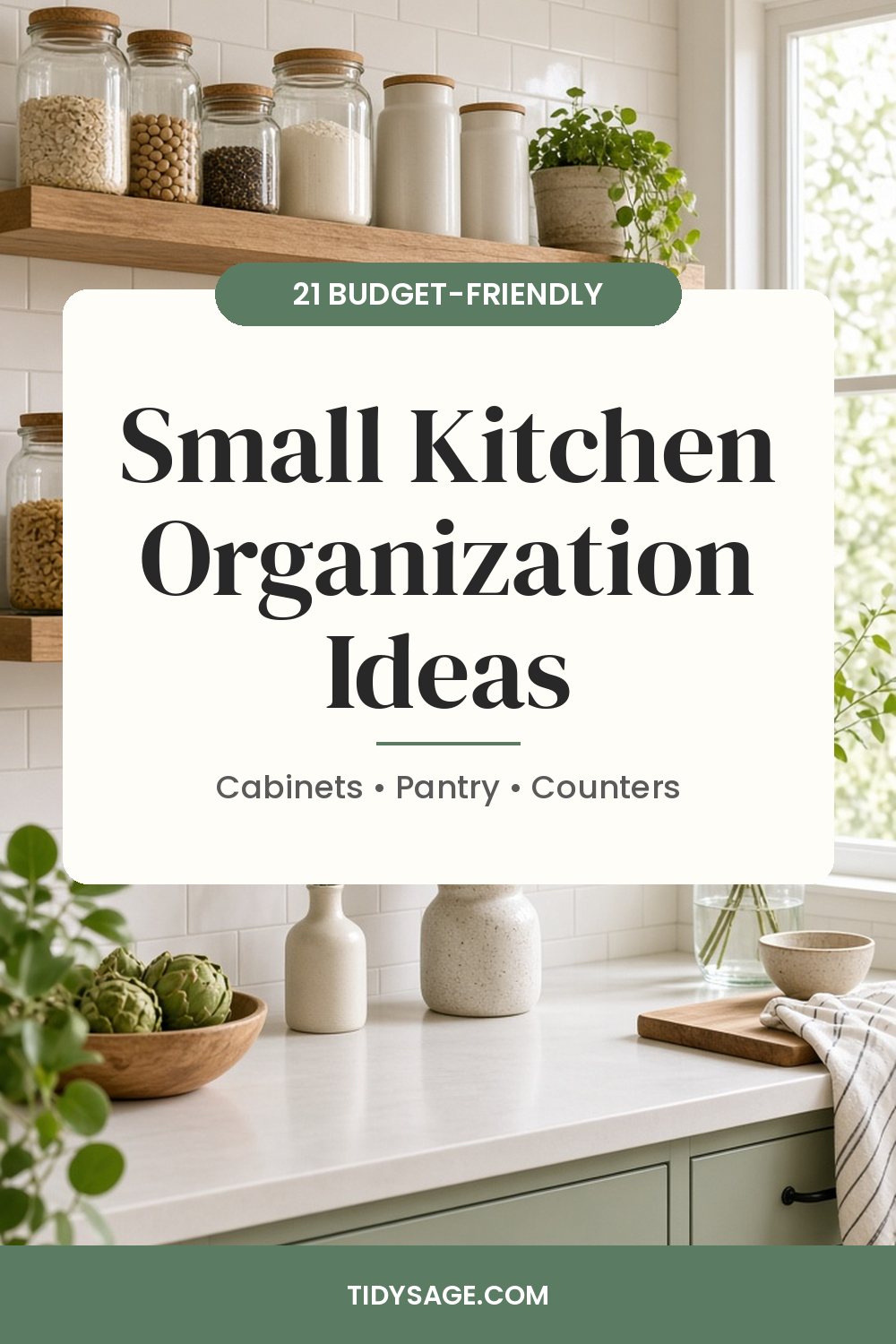
This guide walks through budget-friendly small kitchen organization ideas, zone by zone. None of them require drilling into tile or replacing cabinets, and most can be done in an afternoon. Start with the free steps first — you may find you need to buy far less than you think.
Step 1: Edit Before You Organize (Free)
Every professional organizer says some version of the same thing: you can't organize clutter. Before buying a single bin, pull everything out of one cabinet or drawer at a time and sort it into four groups:
- Use weekly — stays in prime, easy-to-reach spots.
- Use monthly or seasonally — goes high, low, or to the back.
- Duplicates — keep the best one or two (most kitchens have several spatulas and more mugs than people).
- Broken, expired, or never used — recycle, donate, or toss.
Check expiry dates on spices, sauces, and baking supplies while you're there. Doing one zone at a time keeps the job manageable and stops the "everything is on the floor" panic halfway through.
Step 2: Set Up Kitchen Zones
Once the extras are gone, place items where you actually use them. This one idea makes a small kitchen feel bigger because you stop walking back and forth.
- Prep zone — cutting boards, knives, mixing bowls, and measuring cups near your largest stretch of counter.
- Cooking zone — pots, pans, oils, salt, and utensils beside the stove.
- Cleaning zone — dish soap, sponges, towels, and trash bags around the sink.
- Dish zone — plates, glasses, and cutlery close to the dishwasher or drying rack so unloading takes seconds.
- Pantry zone — food storage grouped by category.
Cabinet Organization Ideas for Small Kitchens
3. Add a shelf riser inside tall cabinets
Most cabinet shelves have a lot of empty air above short stacks of plates or mugs. A simple wire or bamboo shelf riser effectively doubles one shelf into two levels.
Look for stackable or expandable versions so they fit odd cabinet widths
Check price on Amazon4. Store pans and lids vertically
Stacking pans means lifting three to get to one. A vertical pan rack or a set of adjustable dividers lets you slide out exactly the pan you need. Lids can stand upright in a narrow lid organizer or even a sturdy magazine file.
5. Use the inside of cabinet doors
Adhesive hooks and slim door-mounted racks can hold measuring spoons, pot holders, or cleaning cloths. Measure the depth between door and shelf before buying anything so the door still closes.
6. Put a turntable in corner cabinets
Corner cabinets are where things go to be forgotten. A lazy Susan (turntable) brings items from the back to the front with a spin. They work especially well for oils, vinegars, and sauces.
A non-slip, two-tier version fits more bottles in tall cabinets
Check price on Amazon7. Pull-out drawers for deep base cabinets
If you have deep lower cabinets, a freestanding pull-out basket or sliding organizer means you no longer kneel on the floor to dig. Many slide-out models simply sit on the cabinet floor and need only a few screws — check that your rental agreement allows that before installing.
Small Pantry Organization (Even Without a Pantry)
8. Decant only what you use often
Clear, airtight containers make it easy to see when you're running low and keep dry goods fresher. You don't need to decant everything — focus on daily staples like rice, oats, pasta, flour, and snacks. Write the expiry date on a small piece of masking tape on the bottom of the container.
Square containers waste less shelf space than round ones
Check price on Amazon9. Group food in bins by category
Breakfast, baking, snacks, canned goods, and sauces each get a bin. When you need something, you pull out one bin rather than searching the whole shelf. This also makes grocery lists faster — one glance tells you what's missing.
10. Use stepped shelf organizers for cans and spices
A tiered riser lets you see the label on every can or jar instead of just the front row. That alone tends to cut down on accidental duplicate purchases.
11. Turn a closet door or wall into a pantry
No pantry? An over-the-door rack with adjustable baskets can hold an impressive amount of dry goods, spices, and wraps. A slim rolling cart that fits beside the fridge is another popular solution for narrow gaps.
Check your door thickness and clearance before ordering
Check price on AmazonCounter Organization Ideas
12. Keep only daily-use items out
Clear counters make a small kitchen feel instantly larger and easier to clean. A helpful rule: if an appliance isn't used at least a few times a week, it lives in a cabinet. The kettle and coffee maker might earn a spot; the bread maker probably doesn't.
13. Corral what stays out on a tray
A tray or wooden board groups oil, salt, and pepper near the stove so the counter looks intentional rather than cluttered. It also lifts everything at once when you wipe down.
14. Use a utensil crock instead of a stuffed drawer
Store the cooking tools you grab most — spatula, wooden spoon, tongs, whisk — upright in a crock by the stove. This frees up an entire drawer for something else.
15. Go vertical with a wall rail or magnetic strip
A wall-mounted rail with hooks holds utensils, mugs, or small baskets. A magnetic knife strip removes the bulky knife block from the counter. For renters, look for strong adhesive options rated for the weight you plan to hang.
Drawer and Under-Sink Organization
16. Use drawer dividers
Adjustable bamboo dividers or simple modular trays stop utensils, wraps, and gadgets from becoming a jumble. Measure the inside of the drawer (width, depth, and height) before buying.
Spring-loaded dividers fit most drawer depths without tools
Check price on Amazon17. Store foil, wrap, and bags upright
A wrap organizer — or a simple file holder inside a cabinet — keeps foil, cling film, parchment, and zip bags standing in a row instead of tangled in a drawer.
18. Add a two-tier organizer under the sink
The space under the sink is usually wasted above the bottles. A two-tier sliding organizer that fits around the pipes doubles the usable space. A small caddy keeps the most-used cleaning products portable.
Safety note: store cleaning products away from food, keep them in their original labelled containers, and use child locks if young children are in the home. Never mix bleach with ammonia or with acidic cleaners such as vinegar — the combination can release harmful gases.
19. Hang a tension rod for spray bottles
A tension rod installed under the sink lets spray bottles hang by their triggers, freeing the cabinet floor for a bin of sponges and refills.
Budget Tricks That Make a Big Difference
20. Shop your home first
Shoeboxes, glass jars from sauces, and baskets from other rooms make perfectly good organizers. Test a layout with free containers before buying anything, so you know the exact sizes you need.
21. Label everything — simply
Labels help everyone in the household put things back in the same place, which is what actually keeps a kitchen organized. A label maker is nice, but masking tape and a marker work just as well to start.
A Simple Weekend Plan
If the whole kitchen feels overwhelming, break it into four short sessions:
| Session | Focus | Time |
|---|---|---|
| 1 | Counters and one drawer | ~1 hour |
| 2 | Upper cabinets | ~1–2 hours |
| 3 | Pantry or food storage | ~1–2 hours |
| 4 | Lower cabinets and under-sink | ~1–2 hours |
Times will vary with how much you own — that's normal. The point is to finish one zone completely before starting the next.
How to Keep a Small Kitchen Organized
- Reset nightly. Spend five minutes clearing the counter and running or emptying the dishwasher.
- One in, one out. When a new gadget comes in, an old one leaves.
- Review monthly. Glance at the pantry before grocery shopping and pull anything near its expiry date to the front.
- Adjust the system, not yourself. If something keeps ending up in the wrong place, move its "home" to where it naturally lands.
Frequently Asked Questions
How do I organize a small kitchen with no pantry?
Use vertical space: an over-the-door rack, a slim rolling cart, or one dedicated upper cabinet with bins by category. Keep only daily-use foods at eye level.
What should not be stored on kitchen counters?
Anything used less than a few times a week — specialty appliances, extra utensils, mail, and décor that collects grease. Keep counters for daily tools and prep space.
What is the cheapest way to organize kitchen cabinets?
Declutter first (free), then reuse boxes and jars you already own. Add low-cost items like shelf risers and turntables only where you still see wasted space.
How do I organize deep kitchen cabinets?
Use bins or baskets you can pull out like drawers, so nothing gets lost at the back. Store heavy items low and lighter, less-used items higher.
How often should I reorganize my kitchen?
A quick monthly reset and a deeper review once or twice a year are usually enough if you reset counters daily.
The Bottom Line
The best small kitchen organization ideas aren't about buying more containers — they're about keeping less, zoning what remains, and using vertical space. Start with one drawer today. Small wins build momentum, and within a weekend your kitchen can feel noticeably bigger.
Save this post to your Kitchen Organization board on Pinterest so you can come back to it zone by zone.
Pin it for later